



Supporting disabled people from Ukraine
Our work involves in-depth interviews and surveys in both the UK and Ukraine with Ukrainians with disabilities.
In the UK we aim to improve the lives of Ukrainian war refugees with disabilities and promote pathways for longer-term settlement for this group.
In Ukraine we aim to help those with disabilities by supporting emergency protection during the war and identify ways to support longer-term reconstruction.
Background
- Large-scale survey data collected in Ukraine during the initial weeks of the conflict showed a significant association between having a disability and post-traumatic distress.
- Later work with nearly 10000 displaced Ukrainians across Europe found those with visual or mobility difficulties reported greater anxiety and poor sleep.
- In the UK more than 250,000 visas have been issued by the Home Office under the Ukraine schemes. Approximately 15% of new arrivals reported significant physical or mental health conditions, with 32% receiving healthcare treatment before leaving Ukraine. However, we know little about the particular challenges faced by Ukrainian war refugees with disabilities in the UK.
- The number of persons with disabilities in Ukraine has risen significantly since 2022. Many face deepening poverty, low levels of employment (only 17% are formally employed), poor housing, and severe disruptions to social care and rehabilitation.
Our work
- We conducted the first UK research focused specifically on physically disabled Ukrainian war refugees.
- During in-depth interviews in the UK (2024) we questioned 45 Ukrainian war refugees with physical and sensory disabilities. Research questions included the journey to the UK, subsequent housing, work, education, welfare, healthcare, social relations, and mental health. Results are reported below.
- In a companion survey in the UK (2026) we are using a structured questionnaire to explore these issues, employing a further sample of refugees with physical and sensory disabilities. So far, we have 200 completed surveys but are still collecting data. You can participate here.
- In Ukraine, we worked with with adults with physical disabilities and caregivers, including war veterans. In online interviews and focus groups we questioned 51 disabled respondents in this country on how the war has affected access to rehabilitation, healthcare, housing, employment, and independent living.
- Following our request, the Office for National Statistics has published new analysis of adults under the Ukraine Humanitarian Schemes who reported a long-term physical or mental health condition. Access the analysis here.
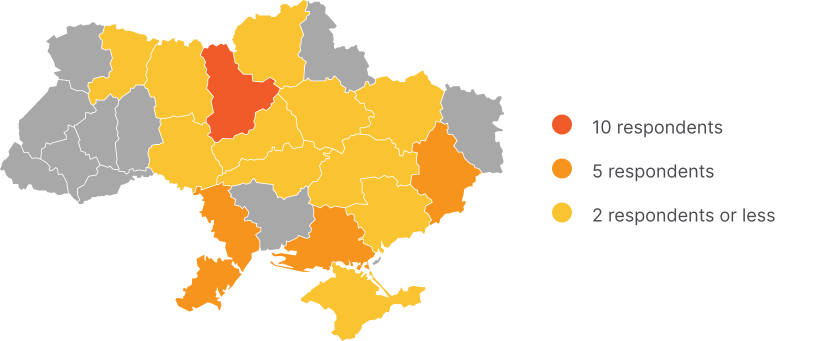
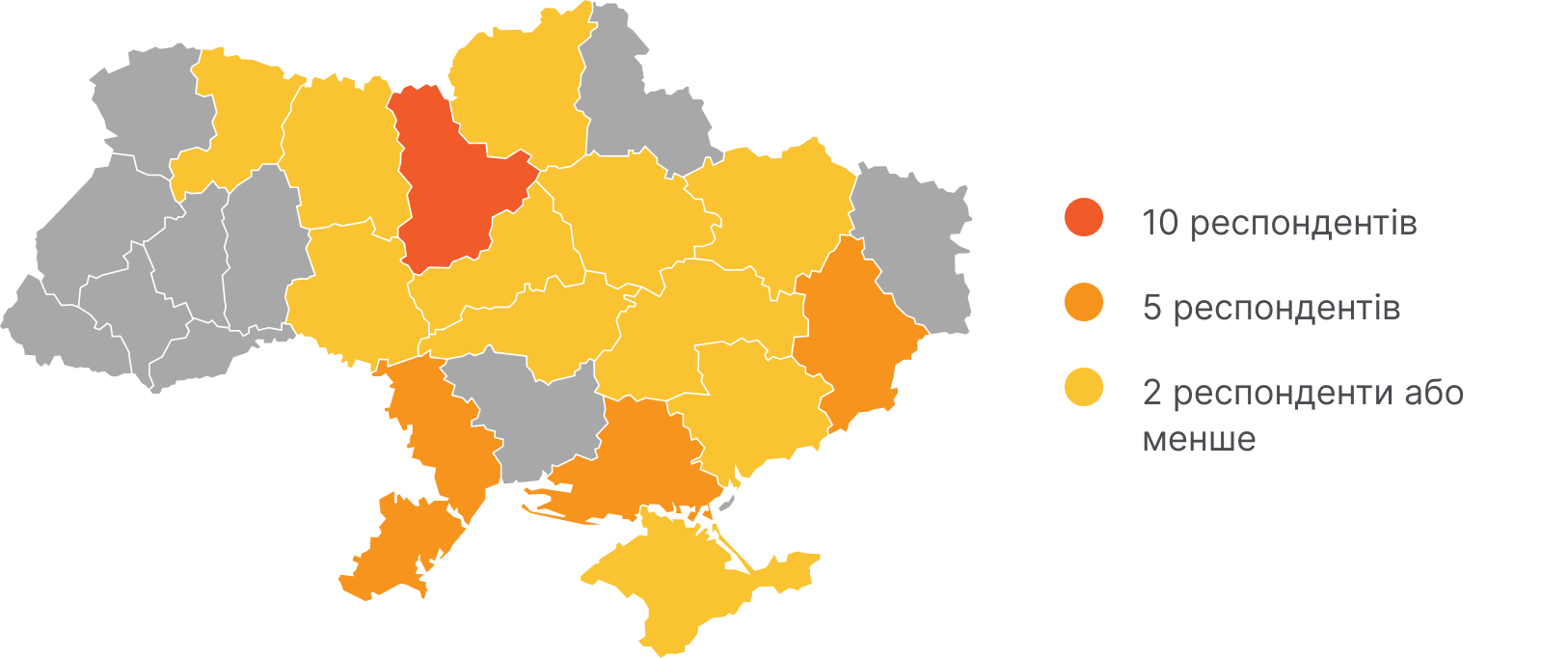
Figure 1: Origin of disabled Ukrainian war refugees in our UK interview sample

10 respondents
5 respondents
2 respondents or less
Scroll

Impact of the war on cities
City / oblast
Total
Active hostilities / destroyed / occupied cities
Donetsk (city & oblast) (5), Zaporizhzhia (city & oblast) (2), Kherson (city & oblast) (5), Crimea (1)
13
Cities subject to regular air strikes
Kyiv (city & oblast) (10), Kharkiv (city & oblast) (2), Chernihiv (2), Dnipro (2), Odesa (5)
21
Peripheral areas affected by indirect hostilities (occasional air strikes)
Vinnytsia (1), Zhytomyr (1), Cherkasy (1), Poltava (1), Rivne (1), Kropyvnytskyi (1)
6
Not specified
(5)
5
City / oblast
Impact of the war on cities
Total respondents
Donetsk (city & oblast), Zaporizhzhia (city & oblast), Kherson (city & oblast), Crimea
Active hostilities / destroyed / occupied cities
13
Kyiv (city & oblast), Kharkiv (city & oblast), Chernihiv, Dnipro, Odesa
Cities subject to regular air strikes
21
Vinnytsia, Zhytomyr, Cherkasy, Poltava, Rivne, Kropyvnytskyi
Peripheral areas affected by indirect hostilities (occasional air strikes)
6
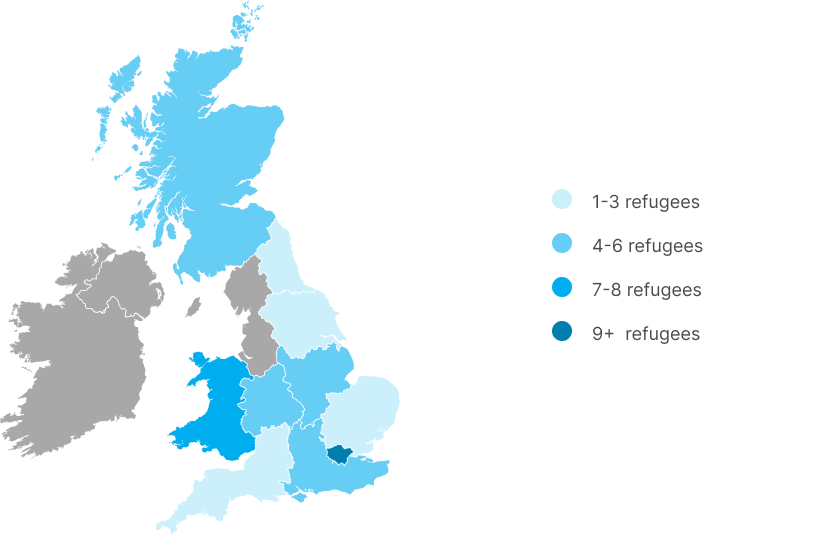
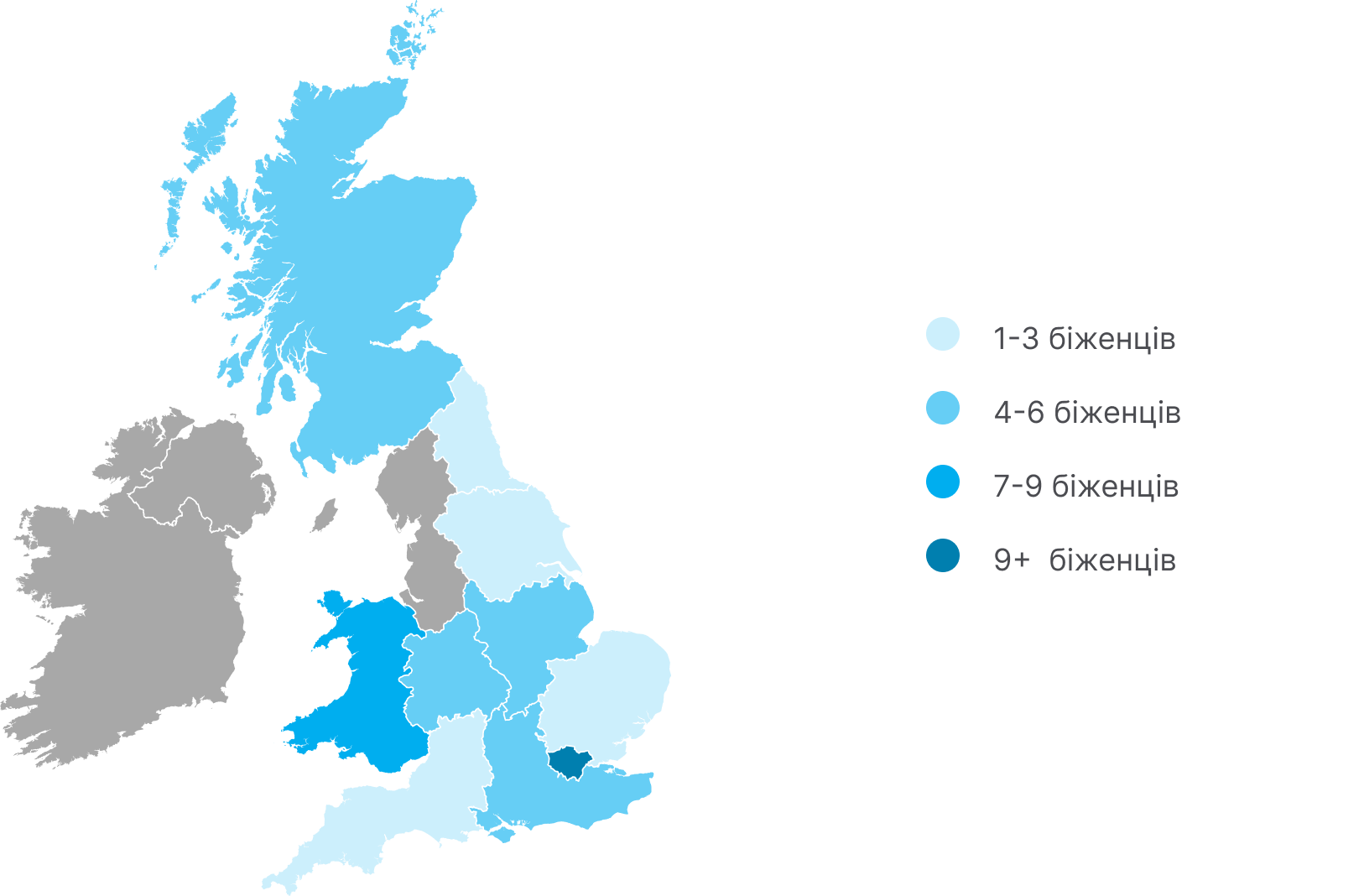
Figure 2: Current UK residence of our interview sample
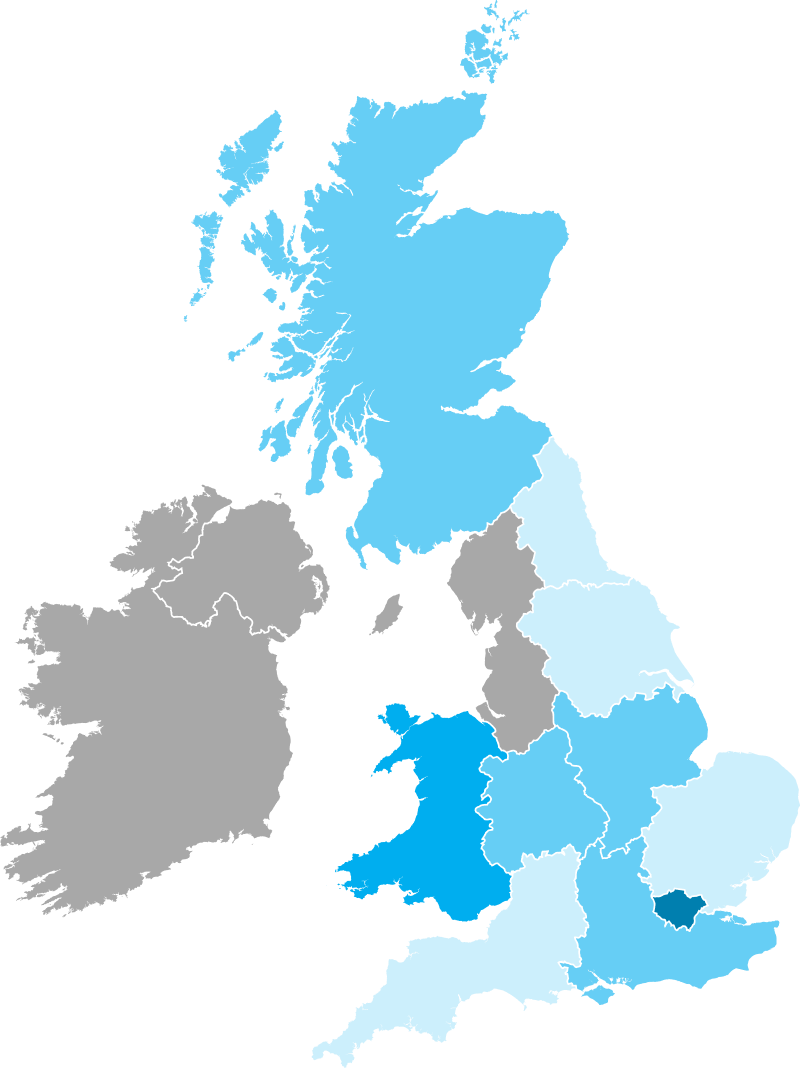
UK region
Places included
Total
London
London, Croydon
9
Wales
Cardiff, Carmarthen
7
West Midlands
Birmingham, Solihull, Coventry, Warwick
6
Scotland
Glasgow, Edinburgh
5
South East England
Oxfordshire, Reading, Brighton, Eastbourne
5
East Midlands
Nottingham, Sheffield
4
Yorkshire & the Humber
Leeds, North Yorkshire
2
South West England
Bristol, Truro
2
North East England
Newcastle
1
East of England
Fakenham
1
Not specified
-
3
Total
45
1-3 refugees
4-6 refugees
7-8 refugees
9+ refugees
Stability and Settlement for Disabled Ukrainian Refugees
Robin Goodwin, Tarandeep Kang, Olena Orlova, University of Warwick
Key findings in the UK
- Uncertainty about the opportunity to remain long-term in the UK is an important impediment to the employment, housing, and well-being of all Ukrainian refugees in the UK, but these challenges are particularly severe for those with disabilities.
- In our survey a third of respondents were receiving medical treatment in the UK, 12% more waiting for treatment. However, two-thirds said language barriers affected access to healthcare and rehabilitation. UK rehabilitation, specialist care, mobility aids and disability-inclusive services are unavailable or unsafe in Ukraine: “ … when Russia came, we did not use state services at all… ” (Antonina, on behalf of a disabled child with cerebral palsy, wheelchair user)
- Despite a strong motivation to work, inappropriate JobCentre referrals and delays in receiving clinical assessments and rehabilitation led many unable to engage in employment: “I’m visually impaired... the job centre... sent me to be a bus driver. ” (Victoria). In our survey 44% had volunteered in the UK.
- Some with disabilities require financial support. However complex English-only forms and inconsistent professional advice led many eligible participants to abandon applications: “ …it was difficult for me here to organise it at first with the language barrier... with the lack of support for special children with disabilities. ” (Valeriia, parent of a child with vision impairment)
- Moves between temporary accommodations and a lack of accessible housing reduced stability and interrupted care: “nothing even goes here except taxis... it’s a lot of money... if I need to go to the neurologist I need the bus... a healthy person can get there in 5-6 minutes, it takes me half an hour. ” (Olga, MS).
- Depression, anxiety and social isolation were common in this group. This reduced work-readiness, especially for those in rural areas or without peer/community networks: “I still have depression... this is one of the reasons why I can't find a job now. I just pass out for a few days... ” (Mykola, connective tissue dysplasia). We assessed mental health using the 9-item Ukrainian version of the Continuous Traumatic Stress Response scale (CTSR). 58% scored above warning threshold for symptoms linked to depression or anxiety. Highest sub-scores were for helplessness, showing many feel unable to controltheir future. Participants emphasised the need for Ukrainian-speaking psychologists who understand their cultural and war experiences. While Ukrainian-led support is valued, provision remains underfunded and uneven.
Recommendations in the UK

Participants consistently described an “information vacuum” during their first months / year in the UK. Many struggled to understand how to access disability-related benefits, NHS entitlements (including rehabilitation and medication), GP services, and available mobility schemes. Language barriers and unfamiliarity with the British welfare and healthcare systems, which differ significantly from the Ukrainian system, led to uncompleted benefit applications, delays in accessing healthcare, poor advice from professionals, and in some cases incorrect benefit decisions due to staff assessment errors, resulting in refusals and delays of up to a year before being corrected.
We recommend providing every Ukrainian refugee with physical disabilities with a short, translated guide explaining disability benefits, GP and NHS access, rehabilitation, medication, and mobility support. This should be given through local councils, Job Centres, GP practices, NHS services, and the Department for Work and Pensions teams. They should also be referred straight away to a Ukrainian-speaking support organisation, with access to interpreters and, where needed, specialist legal advice for difficult immigration or benefits cases. Funding should be increased for organisations such as Settled and OPORA so they can provide this support consistently.
In our research with disabled Ukrainian refugees respondents identified particular challenges with PIP assessments. These assessments require detailed medical evidence (e.g. specialist reports, formal diagnoses, supporting letters from healthcare professionals). Many Ukrainian refugees with physical disabilities fled without complete medical records or hold documentation that is not translated into English. As a result, they are often unable to provide the level of evidence typically expected in UK assessments. While a UK-born applicant may submit comprehensive specialist reports, a refugee may only have a brief GP note or supporting letter from a voluntary organisation, which may be viewed as insufficient. This creates a significant barrier to accessing disability-related benefits, even where eligibility criteria are met.
Language barriers further complicate the process. PIP forms and official communications use complex administrative and medical terminology, which can be difficult to understand even for fluent English speakers. When claims are delayed or refused, applicants are often required to make follow-up phone calls, request mandatory reconsiderations, or respond to further queries. For individuals with limited English, hearing impairments, or communication difficulties, managing these phone-based interactions can be particularly challenging. This increases the risk of incomplete applications, unchallenged refusals, or incomplete claims.
We recommend funding translation of medical documents and key benefit paperwork, and funding voluntary sector organisations to help Ukrainian refugees with physical disabilities complete claims, respond to refusals, and request reconsideration where needed. The Department for Work and Pensions staff should also be allowed to accept Ukrainian medical evidence, translated summaries, and supporting letters where full records are missing because of war and displacement.
Housing was one of the most significant structural barriers identified in our research. Participants were placed in accommodation that did not meet their physical needs, including multi-storybuildings without lifts, upper-floor flats unsuitable for people with mobility impairments, elderly individuals in inaccessible housing, and a family with a wheelchair-using child placed on a ship.
These placements directly restricted access to rehabilitation, medical appointments, Job Centre training, interviews, and community support. Many participants were placed in rural or poorly connected areas, limiting their ability to access healthcare, employment, and social networks.
Transport barriers further increased isolation. Participants reported long distances to bus stops, unreliable services, taxi costs of £25-30 per trip, and limited awareness or access to mobility schemes. For some, reaching public transport took significantly longer due to mobility impairments. These barriers reduced work-readiness, affected mental health, and disrupted healthcare continuity.
We recommend that when a Ukrainian refugee declares a physical, visual, hearing, or long-term health condition, a disability housing assessment is carried out before placement. Housing should be checked for lift access, proximity to healthcare, transport links, and access to rehabilitation or employment services. Ukrainian refugees with physical disabilities should not be placed in remote or poorly connected areas unless reliable transport support is in place. Where housing cannot be changed, local councils should provide transport support for medical appointments, work, and essential services.
Participants consistently expressed strong motivation to work. However, many encountered inappropriate job referrals that did not reflect their functional limitations. For example, a visually impaired participant was advised to apply for a bus driver role, and a person with hearing loss was scheduled for a phone-based appointment despite stating this was not manageable.
These examples indicate a lack of individualised assessment and insufficient understanding of disability-related needs within employment services.
We recommend that Ukrainian refugees with physical disabilities are referred directly to Disability Employment Advisers rather than standard pathways. Job Centre staff should check communication needs, functional limitations, and medical restrictions before assigning appointments or suggesting jobs. Interpreters should be available where needed, and appointment formats should be adjusted for hearing, visual, or mobility impairments.
Many participants described depression, anxiety, trauma, and social isolation that directly affected their ability to work and integrate. NHS / GP mental health services were often experienced as difficult to access due to language barriers and limited availability of culturally appropriate support. Services were frequently perceived as focused on short-term or low-intensity interventions, which were not sufficient for individuals experiencing persisting war-related traumas or complex health needs.
Our participants reported that when GP referrals did not result in appropriate psychological support, they sought help informally from Ukrainian psychiatrists. Participants consistently emphasised the importance of speaking to psychologists who speak Ukrainian and understand their cultural and war-related experiences.
Despite this need, Ukrainian psychologists in the UK often do not pursue full UK qualification because the process takes 3-4 years while visa status remains uncertain. As a result, there is a significant unused professional capacity within the Ukrainian community. Those Ukrainian psychologists who have already obtained UK recognition report limited funding and are unable to meet demand.
At present, support is partly provided by Ukrainian-led organisations. For example, the UK-registered charity OPORA delivers online drop-in counselling, face-to-face group therapy, and peer support spaces. While these services are valued, they are not systematically funded and remain geographically uneven. Local councils operate mental health schemes, but access varies significantly by area. Volunteer organisations such as Samaritans and Barnardo’s offer volunteer support, but provision is case based rather than coordinated within a structured, culturally sensitive pathway.
We recommend enabling local councils to commission Ukrainian-led organisations such as OPORA under existing mental health funding streams to provide counselling, group therapy, and peer support in Ukrainian. GPs should be able to refer Ukrainian refugees with physical disabilities directly to these services, and to Ukrainian-speaking mental health professionals where available.
The Rapid Damage and Needs Assessments 4 and 5 (RDNA4 (2022-2024), RDNA5 (2022-2025)), produced by the World Bank, the Government of Ukraine, the European Commission, and the United Nations, assess damage and needs resulting from the war in Ukraine over the period from February 2022 to December 2025. They show that infrastructure damage remains severe after nearly four years of war. As of December 2025, total direct damage was estimated at US$ 195.1 billion, with housing, energy, and transport among the most heavily affected sectors. For disabled people, this damage is not only a matter of general reconstruction but radically effects their daily life. Safe return depends not only on security, but also on the availability of accessible housing, reliable electricity and heating, functioning transport, safe water and sanitation, healthcare, rehabilitation, and local support in the places to which people may return. RDNA5 identifies disabled people as one of the groups most affected by the war and notes that both the prevalence and severity of disability are increasing.
Disability certification systems differ between Ukraine and the UK. Most of our participants were required to re-confirm or re-prove their disability in the UK. For individuals from occupied territories, returning to obtain documentation is either impossible, unsafe, or extremely slow. Delays in confirming disability status can interrupt access to treatment, rehabilitation, and benefits, which negatively affect health outcomes. Legal specialist immigration advisers at Settled report that barriers also arise within the Ukraine Permission Extension process, including rigid biometric requirements, digital-only immigration status systems, strict documentation rules, and limited communication routes in complex cases. In practice, these problems have contributed to delays, benefit disruption, and additional risks for medically vulnerable applicants. The UK should accept existing medical evidence where possible, speed up disability-related decisions, and prevent visa changes from cutting off healthcare, rehabilitation, or disability benefits.
Ukrainian refugees with physical disabilities in the UK represent a clearly defined group (around 3-4% of the Ukrainian refugee population in the UK (DWP 2025, personal communication; ONS, 2023 personal communication)). Over three-quarters (76%) of our study participants originated from Ukrainian cities experiencing active hostilities, occupation, destruction, or regular air strikes (Appendix). Medical infrastructure in these regions has been destroyed or is unsafe. Access to rehabilitation, specialist care, assistive devices, and medication is severely limited or unavailable. Many of our participants had physical or mobility-related disabilities, meaning that inaccessible housing, transport, and healthcare infrastructure in Ukraine would significantly limit their ability to return safely or access essential service (MinRegion 2025, personal communication). Most of our participants rely on UK-based rehabilitation services, ongoing specialist consultations, regular medication, mobility aids and adapted housing. Under the current temporary visa arrangements, uncertainty about future status creates instability in employment, healthcare, and housing. Refugees with physical disabilities are also likely to face particular challenges in meeting any skilled employment criteria required under the new proposed settlement regulations.
For those with permanent physical disabilities who depend on UK-based treatment, rehabilitation, and adapted housing there should be a clear recognition of this when considering the rights of refugees from Ukraine to remain in the UK. Long-term right to remain in the UK needs to consider the specific circumstances of physically disabled Ukrainian refugees.
Key findings in Ukraine
- Both prevalence and severity of disability increasing. RDNA5 (WHO, EU) found disabled people one group most affected by the war. Much infrastructure has gone. Housing, energy, and transport among most heavily affected sectors in Ukraine.
- Ballistic threats leave only 2–5 minutes to reach shelter. Many disabled people need extra time to transfer, dress, put on prosthetics, go downstairs, or wait for support. Inaccessible shelters mean many stay at home, in corridors, or use the “two walls” rule instead. People with hearing impairments may not hear sirens, especially at night. People with visual impairments face risks during blackouts when navigating unfamiliar places:“During air raids I continued to stay closer to the window, so that if there was an explosion, there would be no chance for me to suffer” (wheelchair user)”
- Blackouts during the war can last for many hours, leaving disabled people without lifts, heating, lighting or communication. Winter cold and summer heat increase risks for those relying on ventilation, medication storage or powered equipment. Electric wheelchairs, phones and assistive devices may lose power.
- Pensions and social payments do not cover basic living costs. Many participants rely heavily on spouses, parents, children, neighbours, volunteers or NGO community support. Veterans often describe better access to surgery, prosthetics or military-related medical support, although bureaucracy remains difficult.
- Physically disabled people face major barriers to employment because of inaccessible workplaces, employer attitudes, lack of transport, and limited opportunities due to war disruption.
- The war has intensified fear, anxiety, depression and emotional exhaustion for physically disabled people, while access to suitable psychological support remains limited, expensive or not adapted to their needs. There was a repeated feeling of resignation. Participants explained that during attacks they are afraid not only of the missile or drone itself, but also of being unable to escape, hide, move, or get help. This creates a sense of helplessness, panic attacks and depression.
- We also asked respondents whether living with disability had helped them develop skills, habits or ways of thinking that supported them during the war, and whether these experiences could offer lessons for others. Living with disability had already taught many participants how to plan ahead, adapt, manage uncertainty and solve problems creatively. Participants described developing backup plans, aoapting everyday objects, inventing tools, and finding new ways to cook, move, wash, carry things, or manage without water and electricity. Volunteering to help others also aided their coping.
Recommendations in Ukraine
- Key equipment: Provide greater access to electric wheelchairs, hearing and visual aids.
- Shelter access: Pilot schemes in high-need areas of Ukraine, to include portable ramps, evacuation chairs, handrails, appropriate seating, adapted toilets, grab rails, with clear signage to ensure shelters become physically accessible for disabled people.
- Safety equipment: Provide personal emergency signalling items, such as whistles, small torches, reflective markers and emergency contact cards or bracelets, so that if a person is trapped after a strike or unable to move during an emergency, they have simple ways to alert rescuers or neighbours.
- Connectivity: Provide work-from-home blackout kits, including portable power stations, power banks, 4G/5G routers, mobile data vouchers and charging cables.
- Transportation: Fund accessible transport to essential services, including social taxi vouchers. Make railway discounts for disabled people available all year round, rather than only during restricted periods.
- Mental health: Partner with the All-Ukrainian Mental Health Programme “How Are You?”, linking Ukrainian disability organisations with psychologists, resilience centres and peer-support networks.
- Self-help: Fund disability-led peer support groups so physically disabled people, in particular those recently disabled as a result of the war, can learn practical coping skills, including planning for blackouts, adapting daily tasks, and staying connected with their communities.
- Resilience for all: People with disabilities experience significantly greater difficulties as a result of war. However, there are positive examples of resilience and adaptation from the Ukrainian disabled community that can be shared with all Ukrainians who are struggling to cope with this conflict.
Conclusion
The research reported in this report shows that physically disabled Ukrainians displaced by war face overlapping barriers linked to their disability, displacement, trauma, language, inaccessible systems and visa uncertainty. While many in the UK have benefited from safety and support, these war migrants still require clearer information, accessible housing, welfare guidance, language support, mental health services and a more secure route to stability.
In Ukraine, physically disabled people continue to face major challenges, with many of these exacerbated by the conflict. Bomb shelters are often inaccessible, accommodation ill-suited for rapid evacuation, suitable transport unobtainable, and blackouts particularly difficult for those for whom online connections can be an essential lifeline. Despite clear examples of adaptation and resilience, many disabled people in Ukraine urgently require mental health support to help tackle the fear, anxiety, depression and emotional exhaustion that has resulted from this long and traumatic war.